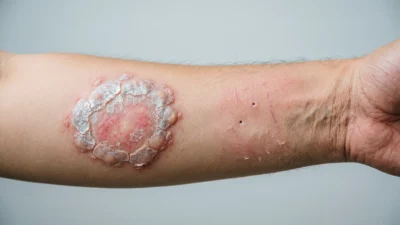
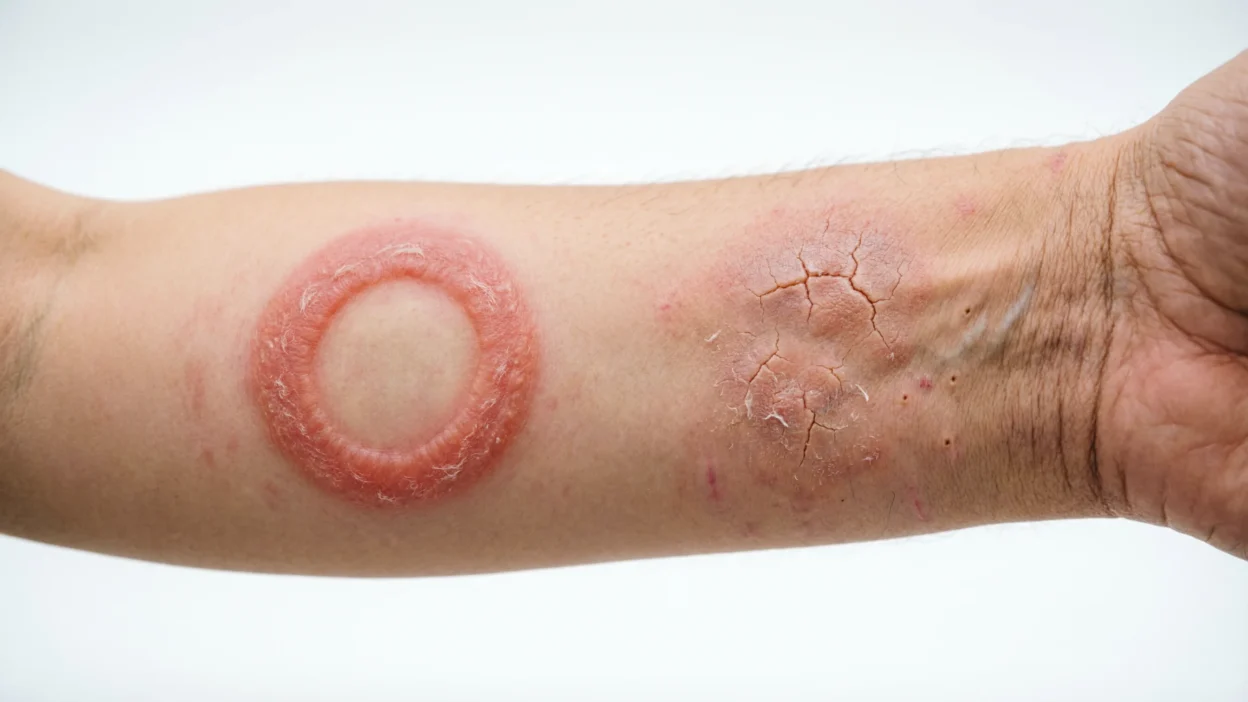
Ringworm and Eczema can sometimes look similar because both may cause red, itchy, irritated skin. However, they have very different causes and treatments.
Ringworm is a fungal infection, while eczema is a non-contagious skin condition related to inflammation and skin sensitivity.
Understanding the differences can help people recognize symptoms and know when medical advice may be helpful.
What Is Ringworm?
Ringworm is a contagious fungal infection that affects the skin, scalp, feet, or nails.
Common ringworm symptoms:
- Circular rash shape
- Red or scaly edges
- Itching
- Clearer skin in the center of the rash
Despite the name, ringworm is not caused by worms.
What Is Eczema?
Eczema is a chronic inflammatory skin condition that causes dry, itchy, irritated patches.
Common eczema symptoms:
- Dry skin
- Itching
- Redness
- Cracking or irritation
- Flare-ups over time
Eczema is not contagious.
Ringworm vs Eczema: Key Differences
| Feature | Ringworm | Eczema |
|---|---|---|
| Cause | Fungal infection | Inflammation/skin sensitivity |
| Contagious | Yes | No |
| Shape | Often circular | Irregular patches |
| Texture | Scaly border | Dry and irritated |
| Treatment | Antifungal medicine | Moisturizers and anti-inflammatory care |
Appearance Differences
Ringworm:
- Often forms a ring-like shape
- Border may look raised or scaly
- Center can appear clearer
Eczema:
- Usually appears as uneven dry patches
- Skin may crack or become rough
- Often linked to chronic irritation
Causes and Triggers
Ringworm causes:
- Contact with infected people or animals
- Shared towels or surfaces
- Warm, moist environments
Eczema triggers:
- Dry weather
- Stress
- Irritating soaps or fabrics
- Allergies or sensitive skin
Treatment Differences
Ringworm:
Often treated with antifungal creams or medication recommended by a healthcare professional.
Eczema:
Management may include:
- Moisturizers
- Gentle skin care
- Avoiding triggers
- Medical creams if advised by a doctor
Using the wrong treatment may sometimes worsen symptoms.
When to See a Doctor
Medical advice may help if:
- Rash spreads quickly
- Symptoms become painful
- Skin becomes infected
- Home care does not help
- Diagnosis is unclear
A healthcare professional can identify the condition properly.
Preventing Skin Irritation
Helpful habits include:
- Keeping skin clean and dry
- Avoiding harsh skin products
- Not sharing personal items
- Moisturizing sensitive skin regularly
Good skin care supports overall skin health.
FAQ: Ringworm or Eczema
1. Is ringworm the same as eczema?
No, ringworm is a fungal infection while eczema is an inflammatory skin condition.
2. Can eczema spread to other people?
No, eczema is not contagious.
3. Does ringworm always look like a ring?
Often yes, but appearance can vary depending on location and severity.
4. Which condition causes more dryness?
Eczema is commonly linked to chronic dry skin.
5. Should I use antifungal cream for eczema?
Only a healthcare professional can recommend the appropriate treatment because the conditions require different care.
Final Thoughts
Understanding the difference between ringworm or eczema is important because they may appear similar but have completely different causes. Ringworm is a contagious fungal infection, while eczema is a chronic inflammatory skin condition.
Recognizing symptoms early and seeking medical guidance when necessary can help support healthier skin and more effective treatment.