Many people confuse Lipedema and cellulite because both can affect the appearance of the legs, hips, or thighs. However, they are very different conditions.
Cellulite is extremely common and mostly cosmetic, while lipedema is a medical condition involving abnormal fat buildup that can cause pain and swelling.
Understanding the differences can help people recognize symptoms and seek appropriate medical advice when needed.
What Is Lipedema?
Lipedema is a long-term medical condition involving abnormal fat accumulation, usually in the legs, hips, buttocks, and sometimes arms.
Common lipedema symptoms:
- Symmetrical fat buildup
- Pain or tenderness
- Easy bruising
- Swelling
- Feeling of heaviness in legs
Lipedema mostly affects women and may worsen over time without management.
What Is Cellulite?
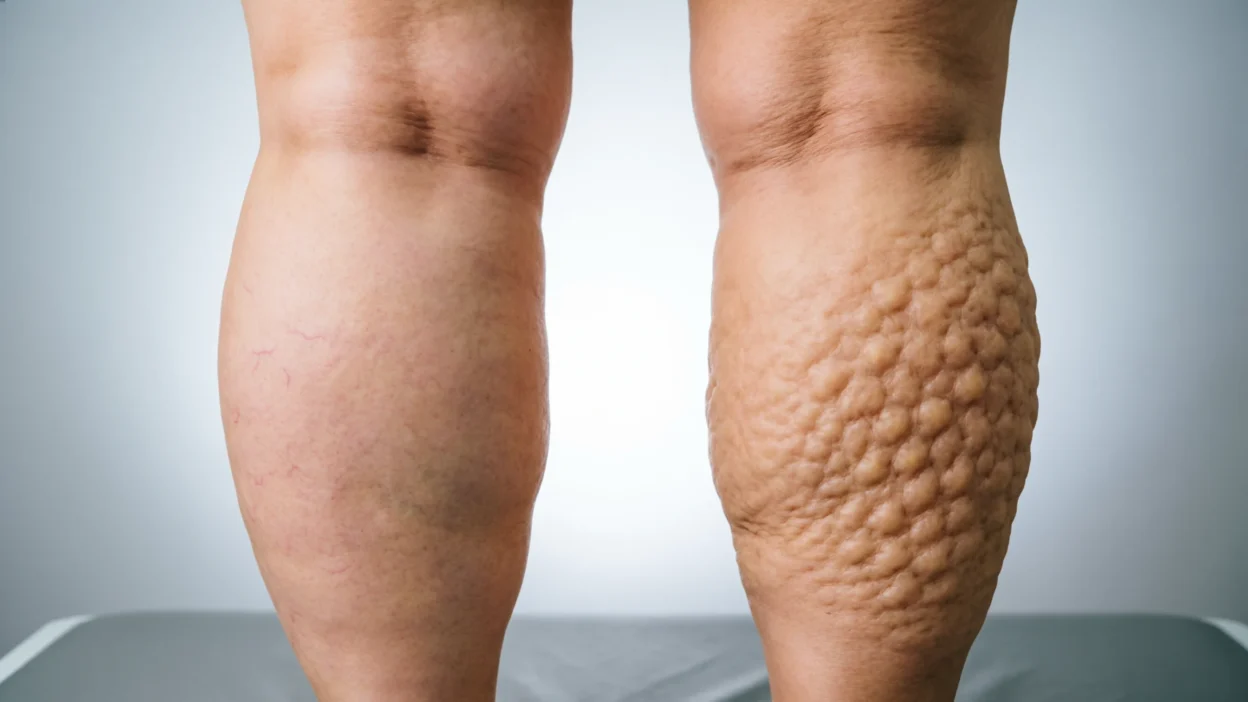
Cellulite refers to dimpled or uneven skin texture caused by fat pushing against connective tissue under the skin.
Common cellulite features:
- Skin dimpling
- “Orange peel” appearance
- Usually painless
- Very common in adults
Cellulite is not considered a disease and affects many people regardless of body size.
Lipedema vs Cellulite: Key Differences
| Feature | Lipedema | Cellulite |
|---|---|---|
| Medical Condition | Yes | No |
| Painful | Often | Usually no |
| Swelling | Common | Rare |
| Bruising | Common | Uncommon |
| Skin Appearance | Enlarged fat areas | Dimpled texture |
| Progression | Can worsen over time | Mostly cosmetic |
Appearance Differences
Lipedema:
- Legs may appear disproportionately larger
- Fat buildup often feels soft or nodular
- Swelling can increase throughout the day
Cellulite:
- Dimpled skin texture
- Mostly cosmetic appearance changes
- Usually no significant swelling or pain
Can Exercise Remove Them?
Cellulite:
Healthy habits may improve appearance slightly:
- Exercise
- Hydration
- Skin care
- Balanced nutrition
Lipedema:
Lifestyle changes can support health, but lipedema fat may not respond normally to diet and exercise alone.
Medical support may sometimes be recommended.
When to Speak With a Doctor
It may help to seek medical advice if someone experiences:
- Painful swelling
- Easy bruising
- Sudden body shape changes
- Heavy or tender legs
A healthcare professional can evaluate symptoms properly.
Emotional and Mental Impact
Both cellulite and lipedema can affect self-confidence and body image.
It is important to remember:
- Cellulite is extremely common
- Bodies naturally vary
- Medical conditions deserve understanding, not shame
Supportive healthcare and self-care can make a positive difference.
FAQ: Lipedema or Cellulite
1. Is lipedema the same as cellulite?
No, lipedema is a medical condition while cellulite is mainly cosmetic.
2. Does cellulite hurt?
Cellulite is usually painless.
3. Can lipedema cause swelling?
Yes, swelling and tenderness are common symptoms.
4. Is cellulite normal?
Yes, cellulite is extremely common in many adults.
5. Can exercise cure lipedema?
Exercise supports overall health, but lipedema may require medical guidance because it behaves differently from regular fat tissue.
Final Thoughts
Understanding the difference between lipedema or cellulite is important because the two conditions are not the same. Cellulite is a common cosmetic skin texture change, while lipedema is a medical condition involving abnormal fat distribution and discomfort.
Recognizing symptoms early and seeking professional guidance can help people better manage their health and well-being.

Lucas Bennett is an American writer passionate about spiritual insight and meaningful storytelling. His work blends faith-centered ideas with real-life experiences, encouraging readers to reflect deeply and live with intention.