
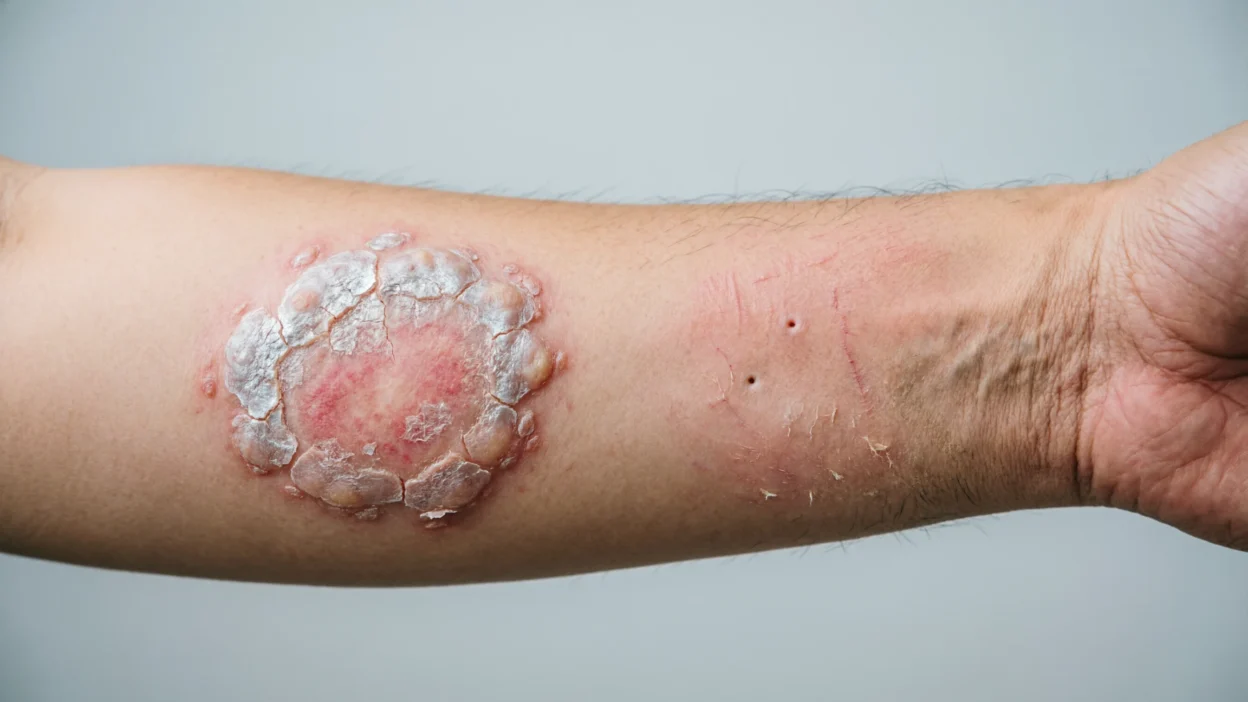
Psoriasis and Eczema are both common skin conditions that may cause redness, itching, irritation, and dry patches. Because they can sometimes look similar, many people confuse them.
However, psoriasis and eczema have different causes, symptoms, and treatment approaches.
Learning the differences can help people better understand symptoms and know when professional medical advice may be helpful.
What Is Psoriasis?
Psoriasis is a chronic autoimmune condition that causes skin cells to build up too quickly.
Common psoriasis symptoms:
- Thick raised patches
- Silvery scales
- Redness
- Dry cracked skin
- Itching or burning
Psoriasis often appears on:
- Elbows
- Knees
- Scalp
- Lower back
What Is Eczema?
Eczema is an inflammatory skin condition linked to skin sensitivity and irritation.
Common eczema symptoms:
- Dry skin
- Intense itching
- Red or inflamed patches
- Cracked or rough skin
- Flare-ups triggered by irritants
Eczema is especially common in children but can affect people of all ages.
Psoriasis vs Eczema: Key Differences
| Feature | Psoriasis | Eczema |
|---|---|---|
| Cause | Autoimmune-related | Skin inflammation/sensitivity |
| Appearance | Thick scaly plaques | Dry inflamed patches |
| Itching | Mild to moderate | Often intense |
| Common Areas | Elbows, knees, scalp | Hands, face, neck, folds |
| Skin Texture | Thick and silvery | Dry and rough |
Appearance Differences
Psoriasis:
- Sharply defined patches
- Thick silvery scales
- Skin buildup appears heavier
Eczema:
- Softer inflamed appearance
- Dryness and cracking
- Less defined borders
The texture often helps distinguish the two conditions.
Itching and Discomfort
Eczema:
Usually causes stronger itching and irritation.
Psoriasis:
May feel more burning, stinging, or thickened rather than intensely itchy.
Symptoms vary from person to person.
Causes and Triggers
Psoriasis triggers may include:
- Stress
- Infections
- Skin injuries
- Certain medications
Eczema triggers may include:
- Dry weather
- Soaps and detergents
- Allergies
- Fabrics or fragrances
Managing triggers often helps reduce flare-ups.
Treatment Approaches
Psoriasis management may include:
- Prescription creams
- Light therapy
- Medical treatments recommended by dermatologists
Eczema management may include:
- Moisturizers
- Gentle skin care
- Avoiding irritants
- Anti-inflammatory creams when advised medically
Because these conditions differ, proper diagnosis matters.
Is Either Condition Contagious?
No. Neither psoriasis nor eczema is contagious.
People cannot “catch” these conditions through normal contact.
When to See a Doctor
Medical evaluation may help if:
- Symptoms worsen
- Skin becomes painful or infected
- Over-the-counter care is not helping
- Diagnosis is uncertain
A dermatologist can identify the condition more accurately.
Living With Chronic Skin Conditions
Both psoriasis and eczema can affect:
- Comfort
- Confidence
- Daily routines
- Emotional well-being
Supportive skincare and professional guidance can help improve quality of life.
FAQ: Psoriasis or Eczema
1. Is psoriasis the same as eczema?
No, psoriasis is autoimmune-related while eczema is mainly inflammatory and sensitivity-related.
2. Which condition itches more?
Eczema usually causes more intense itching.
3. Are psoriasis and eczema contagious?
No, neither condition is contagious.
4. Can stress trigger flare-ups?
Yes, stress may worsen symptoms in both conditions.
5. Should I see a dermatologist?
Yes, especially if symptoms are severe, persistent, or difficult to identify.
Final Thoughts
Understanding the difference between psoriasis or eczema is important because the conditions may look similar but require different care approaches. Psoriasis often causes thick scaly plaques, while eczema is more strongly linked to dry, itchy, inflamed skin.
Recognizing symptoms early and seeking medical advice when needed can support healthier skin and better symptom management.

Lucas Bennett is an American writer passionate about spiritual insight and meaningful storytelling. His work blends faith-centered ideas with real-life experiences, encouraging readers to reflect deeply and live with intention.