Propose and purpose look and sound similar, but they are completely different words with different meanings and grammatical roles. Propose is mainly a verb, while purpose is usually a noun.
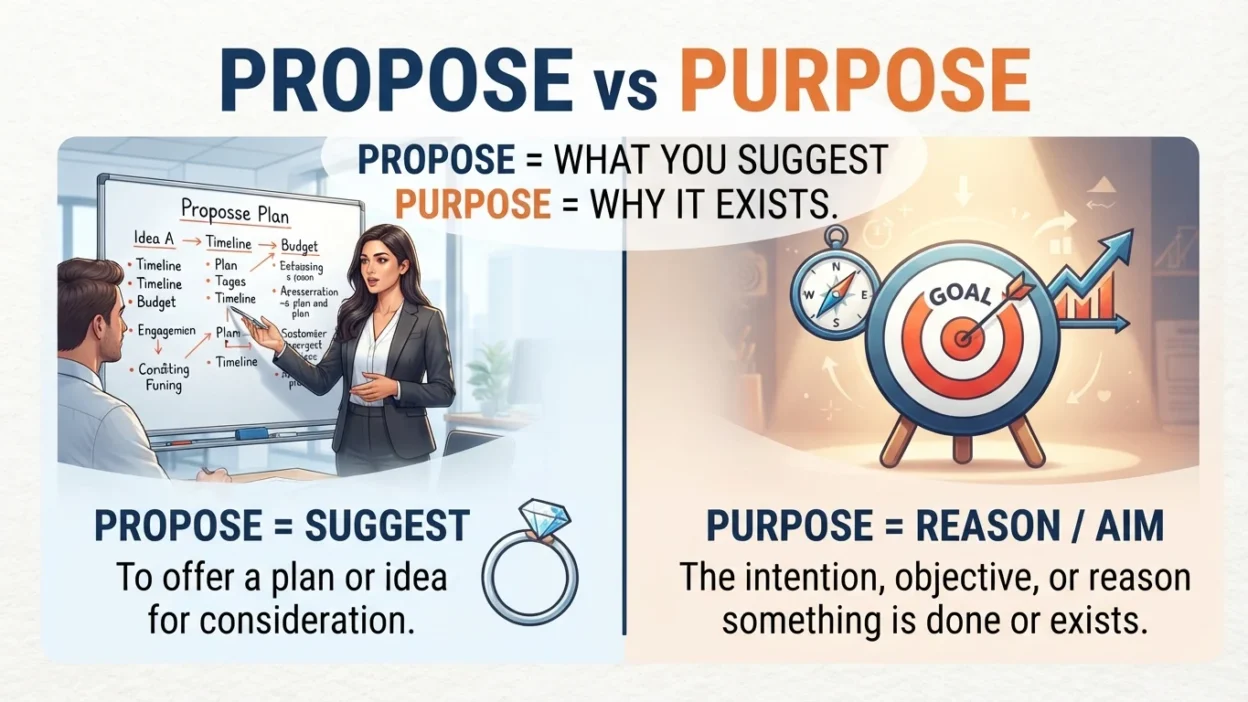
Propose means to suggest an idea, plan, or course of action. It can also mean to ask someone to marry you. Purpose, on the other hand, refers to the reason why something exists, is done, or is intended to happen. Understanding this distinction will help you avoid one of the most common spelling and pronunciation mix-ups in English.
Quick Answer
Propose = to suggest something or ask someone to marry you.
Purpose = the reason, aim, or intended use of something.
Examples:
- I propose a new solution.
- He proposed to her.
- What is the purpose of this meeting?
A simple memory trick: propose = suggest, while purpose = reason or aim.
Why People Confuse “Propose” and “Purpose”
These words are easy to mix up because they begin with “pro-” and have similar-looking spellings. Their pronunciations are also close, especially for English learners.
However, they have different vowel sounds and different meanings:
- propose → /prəˈpoʊz/
- purpose → /ˈpɜːrpəs/ in British English and /ˈpɝːpəs/ in American English
The final sound is also different: - propose → z sound
- purpose → s sound
Propose: Meaning and Usage
Propose is a verb. It means to suggest an idea, plan, method, or action for consideration.
For example:
She proposed a new solution to the problem.
Here, proposed means suggested.
Propose Can Also Mean “Ask to Marry”
Another common meaning of propose is to ask someone to marry you.
He proposed to his girlfriend last weekend.
In this structure, use propose to someone:
He proposed to her.
Not:
He proposed her.
Examples of “Propose”
- I propose a different approach to the problem.
- She proposed a new plan during the meeting.
- They proposed changing the schedule.
- The committee proposed several improvements.
- He proposed a solution that could save time.
- I propose that we begin immediately.
- The government proposed new regulations.
- She proposed meeting on Friday.
- He proposed to his partner during dinner.
- They proposed a new method for handling complaints.
Purpose: Meaning and Usage
Purpose is usually a noun meaning the reason something exists, happens, or is done.
For example:
What is the purpose of this tool?
This asks what the tool is designed or intended to do.
It can also mean a person’s aim, intention, or goal:
My purpose is to help people learn.
Common Expressions With Purpose
- the purpose of something
- for the purpose of
- on purpose
- sense of purpose
- main purpose
- purpose in life
Examples:
The purpose of this meeting is to discuss the project.
She didn’t break the vase on purpose.
Examples of “Purpose”
- What is the purpose of this meeting?
- The purpose of this machine is to clean water.
- I believe everyone needs a sense of purpose.
- He did it on purpose.
- The main purpose of the exercise is to improve strength.
- The purpose of this rule is to protect users.
- She explained the purpose of the project.
- What is the purpose of this document?
- The organization was created for a specific purpose.
- He is searching for a greater purpose in life.
Propose vs Purpose: Comparison Table
| Feature | Propose | Purpose |
|---|---|---|
| Part of speech | Usually verb | Usually noun |
| Main meaning | Suggest or put forward | Reason, aim, or intention |
| Another meaning | Ask someone to marry you | Intended use |
| Example | She proposed a new plan. | What is the purpose of the plan? |
| Pronunciation | /prəˈpoʊz/ | /ˈpɝːpəs/ (AmE) |
| Related word | Proposal | Purposely / purposeful |
When to Use “Propose”
Use propose when someone is suggesting or putting forward something.
Common structures include:
Propose + noun
They proposed a new plan.
Propose + -ing
She proposed changing the schedule.
Propose + that-clause
I propose that we postpone the meeting.
Propose to + person
Use this when talking about a marriage proposal:
He proposed to her.
When to Use “Purpose”
Use purpose when you are talking about the reason, aim, intention, or function of something.
Common structures include:
The purpose of + noun
The purpose of this meeting is to discuss the budget.
For the purpose of + -ing
The room was designed for the purpose of training employees.
On purpose
She didn’t do it on purpose.
A sense of purpose
He found a new sense of purpose.
Propose vs Purpose in Similar Sentences
These two words can appear in related contexts but have completely different jobs.
The manager proposed a new training program.
The manager suggested the program.
The purpose of the training program is to improve employee skills.
The reason or aim of the program is to improve skills.
Another example:
They proposed a new rule.
The purpose of the new rule is to improve safety.
The first sentence tells us what someone suggested. The second tells us why the rule exists.
Propose vs Proposal vs Purpose
These words are related to different grammatical categories.
- propose = verb
- proposal = noun meaning a suggested plan or idea
- purpose = noun meaning reason or aim
Examples:
They proposed a new project.
They submitted a proposal for the project.
The purpose of the project is to solve a specific problem.
Common Mistakes
Mistake 1: Using “purpose” instead of “propose”
❌ I purpose a new idea.
✅ I propose a new idea.
If you mean suggest, use propose.
Mistake 2: Using “propose” instead of “purpose”
❌ What is the propose of this machine?
✅ What is the purpose of this machine?
If you mean reason or function, use purpose.
Mistake 3: Incorrect marriage structure
❌ He proposed her.
✅ He proposed to her.
The verb propose normally takes to before the person when referring to marriage.
Mistake 4: Confusing “proposal” with “purpose”
❌ The proposal of the machine is to clean water.
✅ The purpose of the machine is to clean water.
Proposal means a suggested plan or idea; purpose means the reason or intended function.
Propose vs Purpose Pronunciation
Pronunciation is another useful way to distinguish the two.
Propose
propose → /prəˈpoʊz/
The stress falls on the second syllable:
pro-POSE
The final sound is like z.
Purpose
purpose → /ˈpɝːpəs/ in American English
purpose → /ˈpɜːpəs/ in British English
The stress falls on the first syllable:
PUR-pose
The second syllable has a weak -pəs sound.
A useful pronunciation reminder:
proPOSE = suggest
PURpose = reason
Propose vs Purpose in American and British English
The meanings are essentially the same in American and British English.
The main pronunciation difference is in purpose, particularly the vowel in the first syllable:
- American English: approximately PUR-pəs
- British English: approximately PUR-puhs
Propose is also pronounced similarly in both varieties:
pro-POSE
There is no major difference in meaning between the two varieties.
Similar Words
Words related to “propose”
- Suggest
- Recommend
- Offer
- Put forward
- Present
- Nominate
- Proposal
Words related to “purpose”
- Aim
- Goal
- Intention
- Reason
- Objective
- Function
- Use
For example:
She proposed a solution. = She suggested a solution.
The purpose of the solution is to save time. = The aim of the solution is to save time.
Easy Memory Trick
Remember:
PROPOSE = PUT FORWARD
You propose an idea, plan, solution, or marriage.
PURPOSE = REASON
The purpose of something is the reason or goal behind it.
Think:
You PROPOSE something.
You explain its PURPOSE.
Example:
She proposed a new project because its purpose was to improve customer service.
Frequently Asked Questions
What is the difference between propose and purpose?
Propose is a verb meaning to suggest or put forward something. Purpose is a noun meaning the reason, aim, or intended function of something.
Is “purpose” a verb?
Purpose is primarily used as a noun in modern standard English. The verb purpose does exist in formal usage, meaning to intend or resolve, but it is much less common than the noun.
Is “propose” a noun?
No, propose is normally a verb. The related noun is proposal.
What does “propose to someone” mean?
When talking about marriage, propose to someone means to ask that person to marry you.
Example:
He proposed to her last night.
What is the noun form of propose?
The noun is proposal.
Example:
She made a proposal during the meeting.
What is another word for purpose?
Depending on the context, synonyms include aim, goal, reason, intention, objective, and function.
What is another word for propose?
Common synonyms include suggest, recommend, offer, present, and put forward.
Is “I purpose a plan” correct?
No, not if you mean “I suggest a plan.” The correct sentence is:
I propose a plan.
Final Verdict
The distinction is simple:
Propose = suggest or put forward something.
Purpose = the reason, aim, or intended function of something.
Remember the sentence:
She proposed a new plan because its purpose was to solve the problem.
Here, proposed tells us what she suggested, while purpose tells us why the plan existed.
Conclusion
Although propose and purpose look and sound somewhat alike, they have different meanings and grammatical functions. Propose is a verb used when someone suggests an idea, plan, solution, or marriage. Purpose is a noun used for the reason, aim, intention, or function behind something.
The easiest way to remember the difference is to connect propose with suggest and purpose with reason. Once you learn this simple distinction, you can avoid common spelling, pronunciation, and usage mistakes.
Remember This
PROPOSE = SUGGEST
I propose a new idea.
PURPOSE = REASON / AIM
What is the purpose of this idea?
Also remember:
propose to someone = ask someone to marry you.

Mason Harper is a content creator and author who writes about belief, discipline, and everyday wisdom. With a calm and practical tone, his writing aims to inspire readers to build strong foundations in both character and faith.