
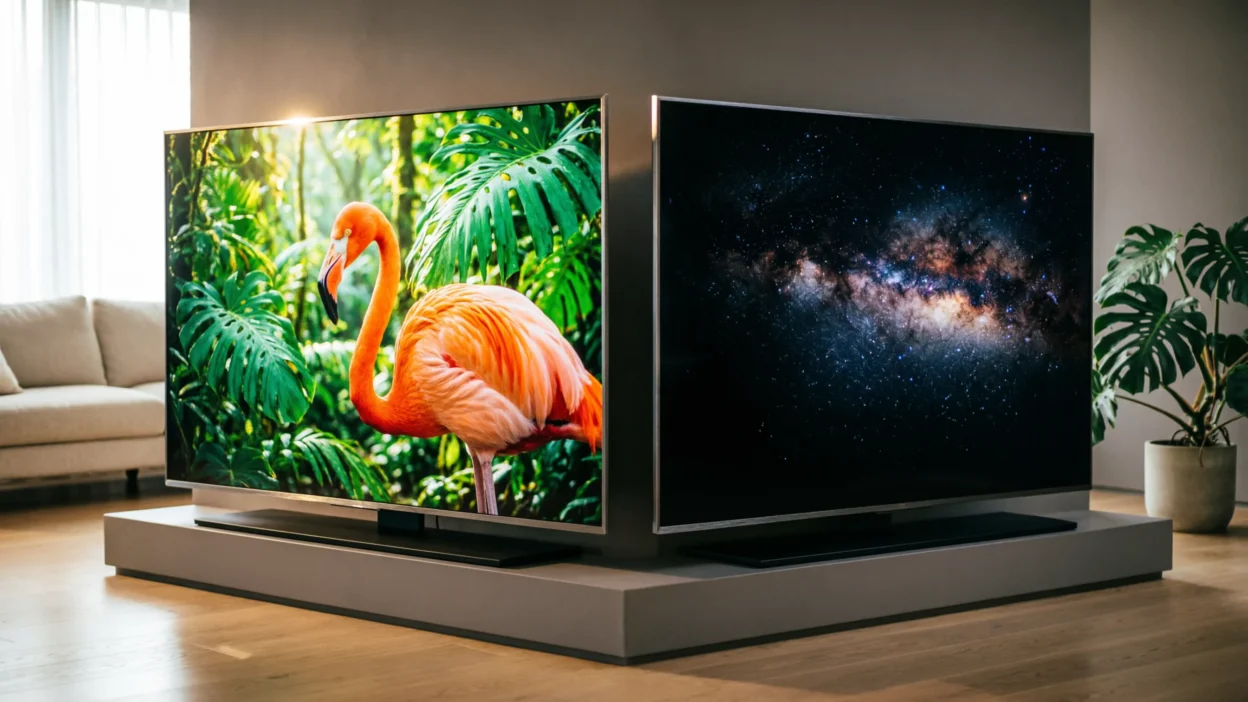
When shopping for a modern television, one of the biggest comparisons is QLED or OLED.
Both technologies deliver impressive picture quality, but they work differently and offer unique advantages. Choosing the right one depends on your budget, viewing habits, and room setup.
What Is OLED?
OLED TVs use self-lighting pixels. Each pixel can turn on and off individually, creating extremely deep blacks and high contrast.
OLED advantages:
- Perfect black levels
- Excellent contrast
- Wide viewing angles
- Smooth cinematic appearance
Because pixels switch off completely in dark scenes, OLED displays are famous for rich picture quality.
What Is QLED?
QLED TVs use LED backlighting combined with quantum dot technology to improve brightness and color.
QLED advantages:
- Very bright display
- Vibrant colors
- Usually more affordable
- Better performance in bright rooms
QLED TVs are especially popular for daytime viewing and sports.
QLED vs OLED: Key Differences
| Feature | QLED | OLED |
|---|---|---|
| Brightness | Higher | Very good |
| Black Levels | Good | Excellent |
| Contrast | Strong | Superior |
| Viewing Angles | Good | Excellent |
| Burn-in Risk | Very low | Possible over long periods |
| Price | Often lower | Usually more expensive |
Picture Quality Comparison
OLED Picture Quality
OLED excels in:
- Dark movie scenes
- Deep blacks
- High contrast
- Cinematic viewing
Movies and games often look more realistic on OLED displays.
QLED Picture Quality
QLED performs very well in:
- Bright environments
- Colorful HDR content
- Sports and daytime TV
Its brightness helps images remain clear even in sunlit rooms.
Which Is Better for Gaming?
Both technologies work well for gaming, especially newer models.
OLED gaming strengths:
- Fast response times
- Deep contrast
- Smooth visuals
QLED gaming strengths:
- Bright screen visibility
- Lower burn-in concerns
- Excellent HDR brightness
Serious gamers often choose based on room lighting and gaming habits.
Burn-In: Is It a Real Concern?
Burn-in can happen on OLED screens if static images remain displayed for very long periods repeatedly.
Examples include:
- News channel logos
- HUD elements in games
- Static menus
Modern OLED TVs include protections that reduce this risk significantly, but QLED generally has less concern in this area.
Which TV Lasts Longer?
Both QLED and OLED TVs are designed to last for years under normal use.
QLED may maintain brightness longer over time, while OLED offers premium picture quality that many viewers prefer despite the higher price.
Which One Should You Buy?
Choose OLED if:
- You love movies and cinematic quality
- You watch in darker rooms
- You want the best contrast possible
Choose QLED if:
- Your room is bright
- You want strong value for money
- You prefer very bright screens
Your environment and viewing style matter more than brand hype.
FAQ: QLED or OLED
1. Is OLED better than QLED?
OLED usually offers better contrast and black levels, while QLED often delivers higher brightness.
2. Which TV is better for bright rooms?
QLED generally performs better in very bright environments.
3. Can OLED TVs get burn-in?
Yes, though modern OLED TVs include features to reduce the risk.
4. Is QLED cheaper than OLED?
In many cases, yes. QLED TVs are often more budget-friendly.
5. Which is better for movies?
OLED is widely preferred for cinematic viewing because of its contrast and deep blacks.
Final Thoughts
Choosing between QLED or OLED comes down to your priorities. OLED delivers stunning contrast and cinematic visuals, while QLED offers exceptional brightness and value.
Both technologies are excellent, and the best choice depends on how and where you watch TV. Understanding their strengths helps you invest in a television that fits your lifestyle perfectly.

Lucas Bennett is an American writer passionate about spiritual insight and meaningful storytelling. His work blends faith-centered ideas with real-life experiences, encouraging readers to reflect deeply and live with intention.