When your skin becomes itchy, red, or inflamed, it can be hard to know what’s going on. Two of the most common conditions are Eczema and Psoriasis.
They may look similar at first, but they have different causes, patterns, and treatments. Knowing the difference can help you manage symptoms more effectively.
What Is Eczema?
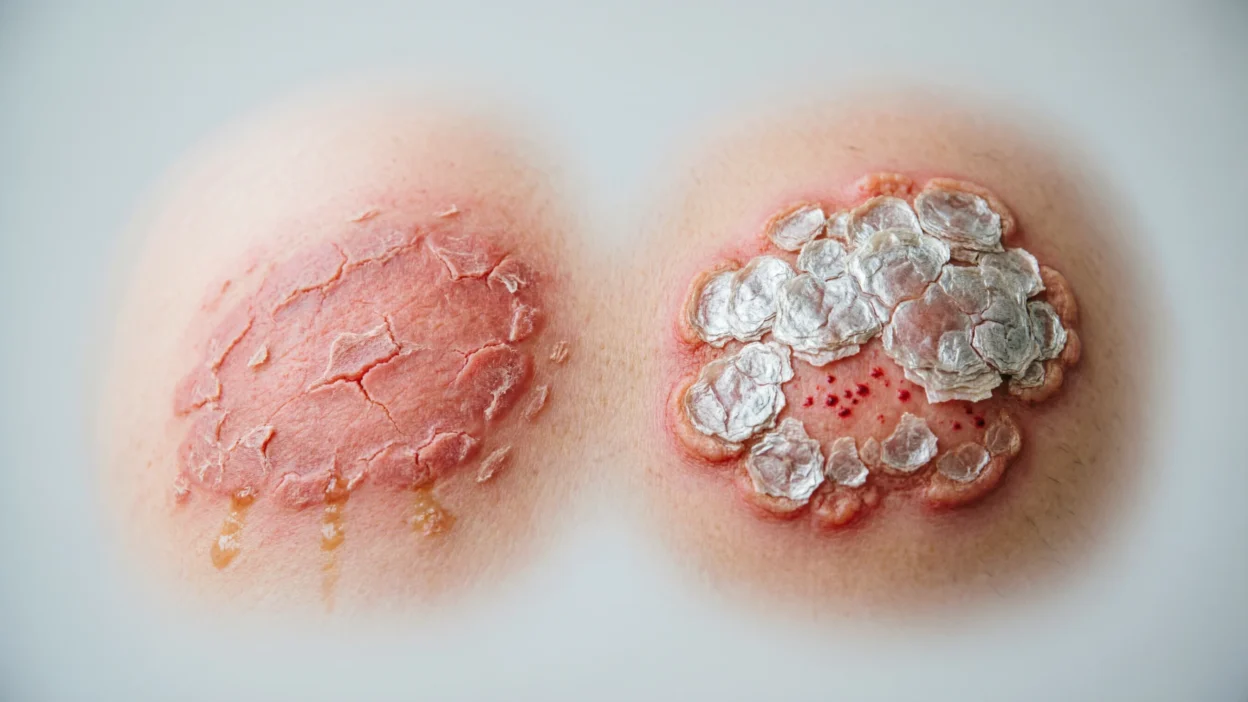
Eczema is a condition that makes your skin dry, sensitive, and very itchy. It often starts in childhood but can affect people at any age.
Common signs:
- Dry, rough patches
- Intense itching (often worse at night)
- Red or inflamed skin
- Sometimes small bumps or oozing areas
Eczema is often linked to allergies, asthma, or sensitive skin.
What Is Psoriasis?
Psoriasis is an autoimmune condition where the skin produces new cells too quickly, leading to buildup on the surface.
Common signs:
- Thick, scaly patches
- Silvery-white scales
- Red or dark raised areas
- Mild itching or burning
It commonly appears on elbows, knees, scalp, and lower back.
Key Differences Between Eczema and Psoriasis
| Feature | Eczema | Psoriasis |
|---|---|---|
| Itching | Very intense | Mild to moderate |
| Appearance | Dry, red, sometimes oozing | Thick, scaly plaques |
| Cause | Skin barrier + immune response | Autoimmune overproduction of skin cells |
| Common Areas | Face, neck, inner elbows | Elbows, knees, scalp |
| Age | Often starts in childhood | Usually develops in adulthood |
What Causes These Conditions?
Eczema Triggers
- Allergies (dust, pollen, foods)
- Harsh soaps or skincare products
- Weather changes
- Stress
Psoriasis Triggers
- Stress
- Infections
- Skin injuries
- Certain medications
Both conditions can flare up and calm down over time.
Treatment and Care Options
Managing Eczema
- Keep skin well-moisturized
- Use gentle, fragrance-free products
- Avoid known triggers
- Use medicated creams if prescribed
Managing Psoriasis
- Topical treatments (creams, ointments)
- Light therapy
- Medications for immune control
- Regular skincare routine
A dermatologist can help confirm the diagnosis and guide treatment.
When to See a Doctor
You should seek medical advice if:
- Symptoms are severe or spreading
- Over-the-counter treatments don’t help
- Skin becomes painful or infected
- You’re unsure which condition you have
Early care can prevent worsening symptoms.
FAQ: Eczema or Psoriasis
1. Can eczema turn into psoriasis?
No, they are different conditions, though they may look similar.
2. Which is more itchy?
Eczema is usually more intensely itchy than psoriasis.
3. Can I have both at the same time?
It’s rare, but possible in some cases.
4. Is psoriasis contagious?
No, neither eczema nor psoriasis is contagious.
5. Which one is more serious?
Both can vary in severity. Psoriasis may be linked to other health conditions, while eczema can greatly affect comfort and sleep.
Final Thoughts
Choosing between eczema or psoriasis isn’t about guessing—it’s about understanding your skin. While they share similarities, their causes and treatments differ.
If you’re unsure, getting the right diagnosis is the best step forward. With proper care, both conditions can be managed, helping you feel more comfortable and confident in your skin.

Daniel Whitmore is a faith-inspired author dedicated to writing content that uplifts and motivates. His focus is on hope, resilience, and moral clarity, offering readers guidance for navigating life with confidence and belief.