If you’re unsure whether burned or burnt is correct, the answer is simple: both are correct past tense and past participle forms of the verb “burn.”
The difference mainly comes down to regional preference and style:
- Burned is more common in American English.
- Burnt is more common in British English.
In most situations, either form will be understood by readers.
What Does “Burn” Mean?
The verb burn means:
- To be damaged or destroyed by fire or heat
- To produce heat, flames, or energy
- To cause injury through heat
Examples:
- “The fire burned all night.”
- “Be careful not to burn your hand.”
Burned vs Burnt: Quick Comparison
| Form | American English | British English |
|---|---|---|
| Burned | More common | Correct |
| Burnt | Correct | More common |
Both forms have the same meaning.
Examples of “Burned”
Past Tense
- “The toast burned in the oven.”
- “They burned the old documents.”
Past Participle
- “The food has burned.”
- “The building was burned during the fire.”
American style guides often favor burned in both cases.
Examples of “Burnt”
Past Tense
- “The candles burnt throughout the evening.”
- “The leaves burnt quickly.”
Adjective Usage
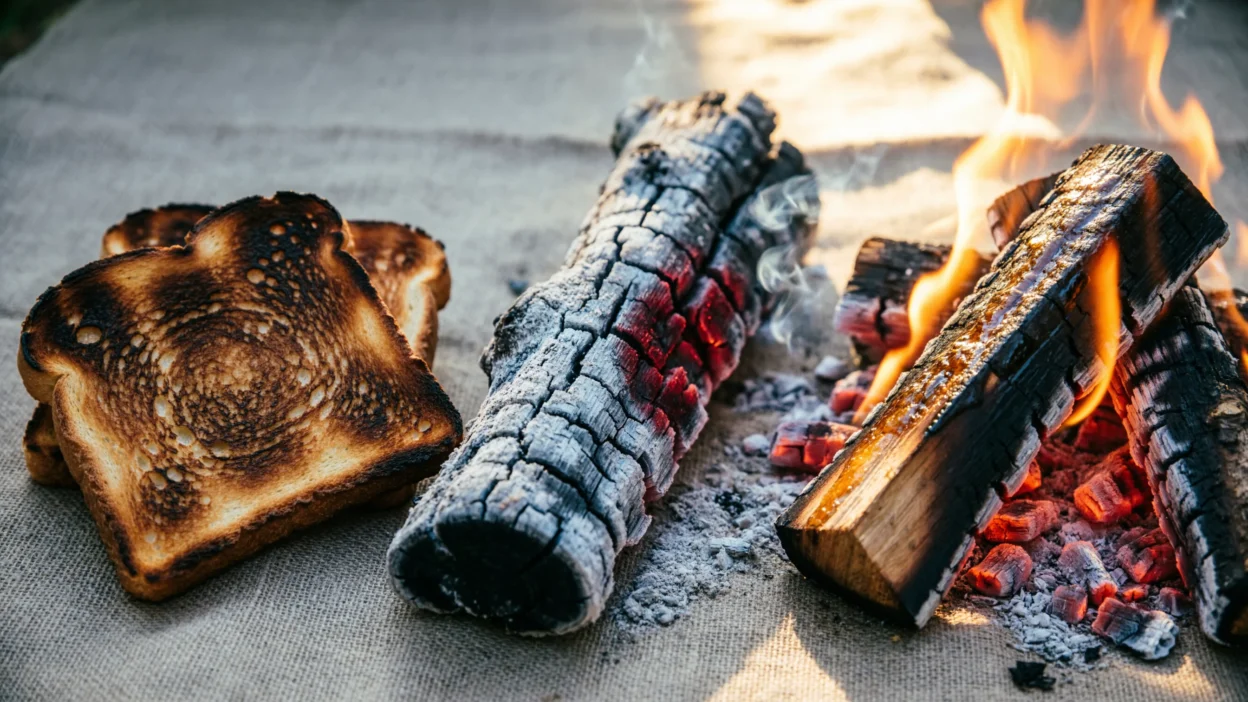
- “The kitchen smelled like burnt toast.”
- “He noticed a burnt piece of wood.”
In British English, burnt is especially common as an adjective.
Burnt as an Adjective
Many writers use burnt to describe something that has been affected by fire or heat.
Examples:
- Burnt toast
- Burnt wood
- Burnt sugar
- Burnt edges
These expressions are common in both American and British English.
Similar American and British Variations
Burned/burnt belongs to a group of verbs with two accepted forms:
| American English | British English |
|---|---|
| Burned | Burnt |
| Learned | Learnt |
| Dreamed | Dreamt |
| Spelled | Spelt |
| Smelled | Smelt |
Both versions are generally accepted.
Which Form Should You Use?
Use “Burned” If:
- Writing for American audiences
- Following U.S. style guides
- Creating content for U.S.-based publications
Use “Burnt” If:
- Writing for British audiences
- Following UK English conventions
- Using it as an adjective (e.g., burnt toast)
Consistency is more important than the specific choice.
Common Examples
Burned
- “The logs burned for hours.”
- “She accidentally burned the cookies.”
Burnt
- “The room smelled of burnt coffee.”
- “The burnt crust tasted bitter.”
Both sound natural depending on the audience and context.
FAQ: Burned or Burnt
1. Is burned correct?
Yes. It is the preferred form in American English.
2. Is burnt correct?
Yes. It is commonly used in British English and as an adjective.
3. Do burned and burnt mean the same thing?
Yes. Both are forms of the verb “burn.”
4. Which is more common in the United States?
Burned is generally more common.
5. Is burnt toast correct?
Yes. “Burnt toast” is a very common expression.
Final Thoughts
When choosing between burned or burnt, remember that both spellings are correct. Burned is generally preferred in American English, while burnt is more common in British English and often appears as an adjective.

Daniel Whitmore is a faith-inspired author dedicated to writing content that uplifts and motivates. His focus is on hope, resilience, and moral clarity, offering readers guidance for navigating life with confidence and belief.